Didier Rochard is a composer, vocalist and creative director whose work spans choral music, songwriting, folk traditions, cultural heritage and landscape-inspired interdisciplinary practice.
For over fifteen years, Didier has been a driving force behind London Contemporary Voices (LCV), which he co-founded with artist Ila Kamalagharan (fka. Anil Sebastian). LCV’s highlights include three BBC Proms appearances, features on four to-10 UK albums and two Grammy-nominated recordings, plus work with over 30 Grammy-nominated artists.
Since 2010, Didier has composed and arranged numerous choral works across genres, with selected recordings now exceeding 100,000 views on YouTube. His arrangements and performances have featured at Southbank Centre’s Royal Festival Hall and Queen Elizabeth Hall, Union Chapel, St John-at-Hackney, Bush Hall, major festival stages, and on broadcasts reaching millions, including BBC Radio 6 Music (Mary Anne Hobbs), Virgin Radio (Edith Bowman), BBC Radio London and Soho Radio.
Didier’s long-standing creative partnership with Anil Sebastian includes choral arrangements for Time To Start, featured on Sebastian’s acclaimed album Mesonoxian. Alongside his own work, Didier has curated and creatively directed concerts for over a decade, commissioning and collaborating with composers and arrangers across contemporary, experimental and cross-genre vocal music. His leadership within LCV has enabled numerous ambitious projects and partnerships with high-profile artists, while also securing grant funding for new creative projects.
A New Chapter: Scotland and Landscape-inspired Practice
Now based in Glasgow, in 2024 Didier’s practice expanded significantly through his Creative Scotland–funded project Drowned, Drained, Swamped & Bogged Down, an immersive exploration of Scotland’s wetland landscapes (building on previous work on Romney Marsh in Kent). This project deepened his commitment to voice-led composition shaped by folklore, heritage, ecology and place, and laid the foundations for a broader creative methodology centred on “Landscape Listening” - an approach combining research, storytelling and multi-arts experimentation to reveal the cultural and emotional significance of landscape at a time of climate emergency.
Didier continues to develop new compositions informed by these environments, weaving together folk songwriting, choral texture and stories drawn from Scotland’s diverse cultural histories.
DROWNED LAND
Drowned Land is a song shaped by my time on Rannoch Moor as part of Drowned, Drained, Swamped & Bogged Down, a project exploring Scotland’s rare, ancient and fragile wetland landscapes. The moor’s dark pools, shifting ground and vast silence form the song’s emotional core, echoing millennia of human interaction with bogs as places of mystery, refuge and ritual.
Across Europe, wetlands have long held ceremonial significance - sites where offerings were made, stories were rooted, and where “bog bodies” have been found preserved for thousands of years. These remnants speak to the deep cultural and spiritual weight these landscapes once carried. Drowned Land draws on this history, allowing the moor to become both a witness and a voice.
Through layered harmonies, ambient textures and subtle field-recorded sound, the song evokes the sense of being held by the land - suspended between the living world and the deep time of the peat beneath. It is an invitation to listen to the quiet power of wetlands: places where memory is preserved, where the past surfaces unexpectedly, and where ecology and mythology intertwine.
A CALLING
A Calling emerges from my ongoing Drowned, Drained, Swamped & Bogged Down project - a creative investigation into Scotland’s wetlands, peat bogs and coastal marshlands.
Drawing on my visits to the islands of Harris, Lewis and Scalpay, where I encountered peat bogs, wet heath and machair mingling under the Atlantic sky, the song is a response to landscapes that hold deep ecological, cultural and mystical resonance.
In A Calling, I channel the voice of the land itself - ancient, atmospheric and alive. The song evokes the whisper of peat, wind over marsh and salt-scented sea air, offering a musical invocation: a calling, from land to listener, reminding us of wetlands’ living heritage – the voice of the landscape, which calls us back to it. Through layered vocals, subtle ambient textures and lyrical imagery rooted in place, the composition seeks to reconnect voice and environment - to honour wetlands not just as ecosystems but as living archives of memory, myth and belonging.
Far from nostalgia, A Calling is a present-day act of listening: a bridge between past and now, between human and habitat. It questions what is lost when peat is drained, marsh drained, bog silenced - but it also opens a space for remembrance, renewal and reverence.
I Dreamed It Alive
I Dreamed It Alive emerges from my engagement with Abernethy Forest as part of Drowned, Drained, Swamped & Bogged Down - a creative investigation into Scotland’s ancient woodlands, peatlands and wetlands. Deep within this forest-mire mosaic, where Scots pine, bog woodland, moorland and peatland co-exist, I found a landscape rich in ecological memory - a place where forest, water and deep time meet.
This song channels the sense of being suspended between forest and wetland: a dream born from woodland hums, peat-soft ground, silent bog-pools and the slow breath of ancient ecosystems. Through layered vocal harmonies, delicate ambient textures, and field-recorded ambience drawn from that environment, I Dreamed It Alive evokes the living, breathing forest-wetland: alive with history, moisture and memory.
More than a portrait of place, the song is an act of listening - a way to resurrect what might otherwise lie hidden beneath roots and peat. It asks: what lives, dreams, or remembers in the layers of forest soil and bog water? And can art revive those buried voices, giving them presence once more?
In I Dreamed It Alive, nature is not a passive backdrop: it is a collaborator. The forest becomes a co-composer. The wetlands provided the rhythm and melodies on which the composition was based. The song invites listeners into a quiet, reverent dialogue with land, memory and loss - suggesting both fragility and resilience, an elegy and a promise.
Glasgow Voices
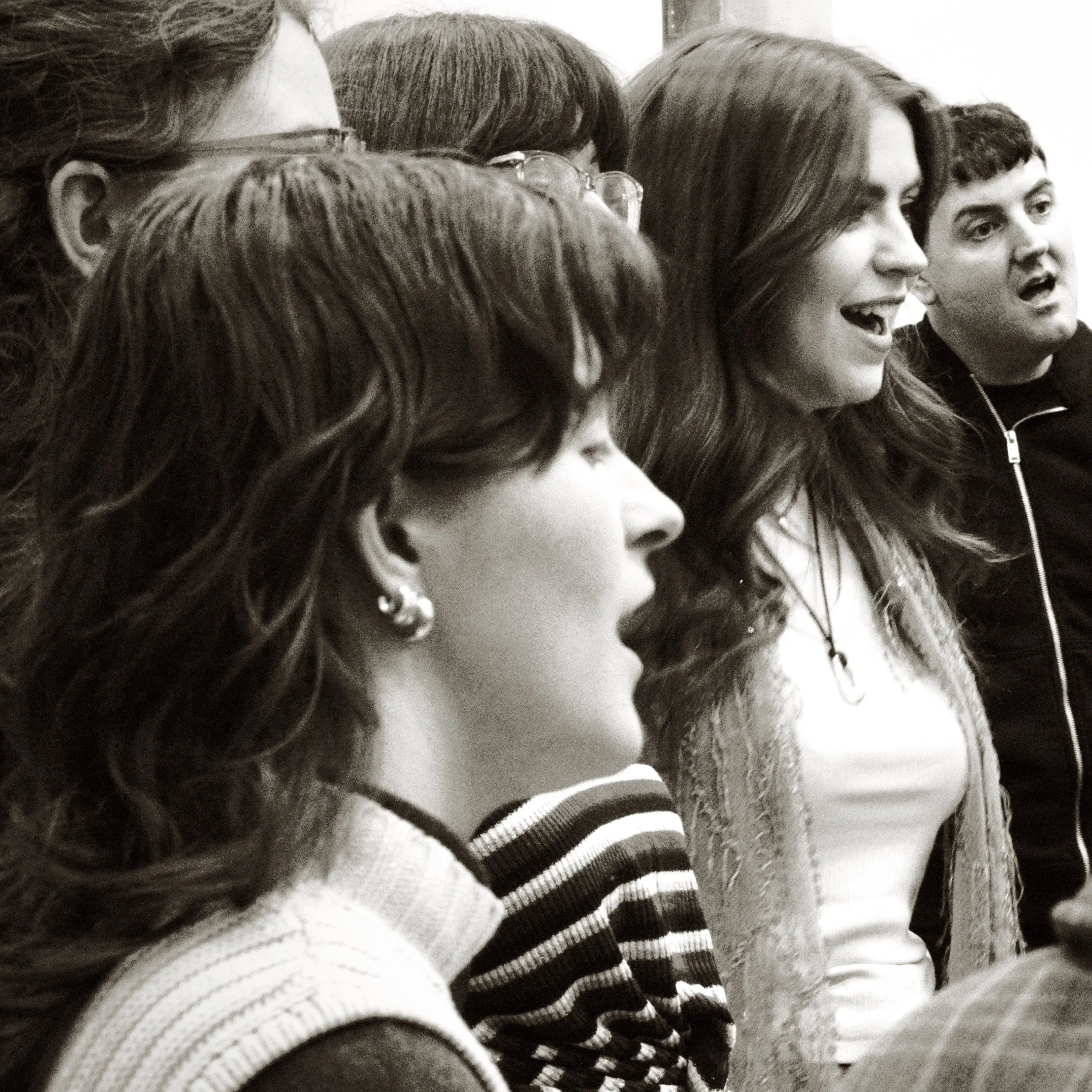
In late 2025 Didier founded Glasgow Voices, a new ensemble within the LCV family. The choir brings together singers connected to Scotland and the north of the UK, and in addition to undertaking a wide variety of projects, will serve as a platform for Didier’s evolving body of vocal work. His intention is to merge his long-established choral practice with his songwriting, creating new vocally-led pieces inspired by Scottish landscapes, folklore and heritage, and developing repertoire that reflects both his history as an arranger and his emerging voice as a composer-performer.
ARRANGING
Examples of Didier’s popular arrangements spanning folk, indie and electronica, presented with London Contemporary Voices.


OTHER Work
Beyond his composing and choral practice, Didier has an extensive background in creative direction, cultural heritage and multi-arts project production. His career includes founding and directing community festivals, leading major arts and heritage initiatives, producing concerts and events across the UK, and working in roles spanning cultural management, curation, environmental arts and interdisciplinary community engagement. He has delivered Creative Scotland and Arts Council-funded projects, supported organisations as a project manager and bid writer, and developed participatory programmes across music, visual arts and landscape-based practice. Further details can be found throughout this website.